Thinking about selling a historic home in Madison? You know it carries more than square footage. It carries story, craftsmanship, and community pride. The right prep can help you protect that legacy while attracting qualified buyers and a strong offer. In this guide, you’ll learn exactly how to get a Madison historic property market-ready without risking its character or compliance. Let’s dive in.
Know your Madison historic status
Madison’s locally designated Historic Preservation District is central to the city’s identity. If your home sits in the district, exterior work typically requires a Certificate of Appropriateness before permits are issued. Ordinary maintenance may be exempt, but changes like fences, siding, windows, additions, and demolition are reviewed. Starting work without approval can result in a stop-work order or required reversal. Review your address and the process on the City’s Historic Preservation pages and gather past approvals for your files. You can learn more about local design review on the City’s Historic Preservation District page at madisonga.com.
Get your paperwork ready early
A well-organized file builds buyer confidence and speeds due diligence. Assemble the following before you list:
- COAs and building permits for any exterior changes in the district. Buyers often ask.
- Itemized contractor invoices, warranties, and dated before-and-after photos.
- Service records for roof, HVAC, electrical, and plumbing.
- Inspection and clearance reports, including termite letters and any system checks.
- Any historic rehabilitation incentive paperwork, if applicable.
If you used Georgia’s state incentives, include your certification documents. The State Income Tax Credit Program offers a credit on qualifying rehabilitation expenses and an 8-year preferential property tax assessment for certified projects that follow state standards and procedures. Read program details at dca.georgia.gov.
Be careful with federal credits. The 20 percent Federal Rehabilitation Investment Tax Credit typically applies to income-producing properties, not owner-occupied primary residences. Do not promise federal credits unless the work was certified and the property qualifies. You can review the Secretary’s Standards and federal guidance at nps.gov.
Follow required lead-paint disclosures
If your home was built before 1978, federal law requires you to disclose known information about lead-based paint, provide the EPA pamphlet “Protect Your Family from Lead in Your Home,” and give buyers a 10-day opportunity to conduct lead testing unless they waive it. Build this into your listing plan to prevent delays. See the EPA’s guidance on lead in homes at epa.gov.
Focus repairs that protect value
Safety and systems come first. A pre-listing inspection helps you avoid last-minute surprises and renegotiations. Ask a licensed inspector to review structure, roof, electrical, plumbing, and HVAC. Then complete the highest-priority safety fixes. You can see the kind of items inspectors flag in a sample report like this one at abcdocz.com.
Common high-value repairs for older homes include:
- Roof and gutters to stop active leaks and enhance curb appeal.
- Electrical safety, grounding, GFCIs near water, and modern smoke detectors.
- HVAC service, filter replacements, and thermostat checks.
- Plumbing leak repairs and addressing failing cast-iron or galvanized segments.
- Termite inspection and any required treatment, with documentation.
Preserve, do not erase, character
For historic features, try to repair rather than replace. If replacement is necessary, match design, material, color, and texture so the work is compatible. New elements should be compatible but clearly of their time. These principles come from the Secretary of the Interior’s Standards and are the basis for local design guidance and many incentive programs. You can review treatment standards at nps.gov.
If you are choosing trades, look for preservation-aware professionals for windows, porches, plaster, and millwork. Sensitive work protects original fabric and your home’s appeal to buyers.
Smart upgrades buyers notice
Buyers of Madison character homes often pay a premium for intact period details paired with reliable systems. Thoughtful updates to kitchens and baths, consistent with the home’s scale and style, can add appeal. Keep finishes timeless and avoid covering original features. Refinishing hardwoods, tuning up historic hardware, and restoring original lighting where safe can create a memorable first impression.
Outside, trim overgrowth, repair steps and rails, and refresh paint where needed. A tidy porch, crisp landscaping, and clean pathways help buyers connect with the property’s story.
Stage for historic-home strengths
Staging matters. Industry research finds that staging can reduce time on market and increase offer prices according to the National Association of Realtors. Focus on the living room, primary bedroom, and kitchen for the best return. Read the NAR summary on how staging boosts sale prices and reduces days on market at nar.realtor.
For historic homes, aim to highlight rather than hide:
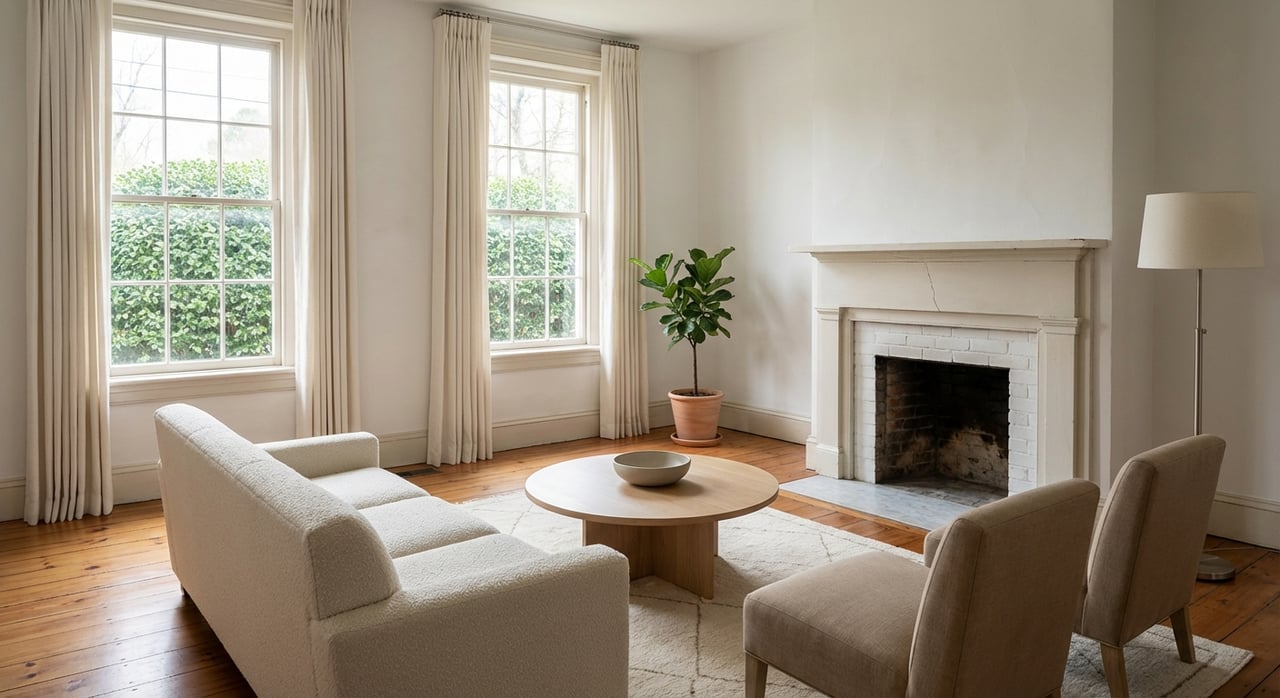
- Use neutral rugs and streamlined furniture to frame mantels, millwork, and built-ins.
- Keep window treatments simple to showcase original sash and natural light.
- Remove visual clutter so details like transoms, stair balusters, and plaster medallions read clearly.
- Balance vignettes with a few period-sensitive pieces and modern comforts, not theme rooms.
Invest in professional photography and media
High-quality photography increases listing views and can lead to faster, stronger offers. Industry studies report a clear payoff when sellers use professional listing photos. See an example of these findings at prnewswire.com.
Plan a shot list that serves both emotion and documentation:
- Wide room photos to show scale and flow.
- Detail close-ups of trim, stair newels, mantels, hardware, and plaster.
- A floor plan and virtual tour for orientation.
- Twilight exterior and, for larger properties, a few tasteful drone context shots.
Market the Madison story
Madison’s historic district and vibrant cultural calendar draw buyers who love character and community. Seasonal home tours and antiques events help spotlight the city’s architecture. Point out proximity to downtown amenities and highlight the Madison-Morgan Cultural Center as a local asset in your listing copy and showing materials. Learn more about regional programming at mmcc-arts.org.
In your remarks and buyer packet, emphasize:
- Character features: original floors, mantels, porches, ironwork.
- Mechanical updates: years and scope of roof, HVAC, electrical, and plumbing work.
- Maintenance records: inspections, warranties, and service logs.
- Compliance: COAs, permits, and any certified rehabilitation documentation.
Build your team and timeline
Line up the right professionals before you go live:
- Listing agent experienced with Madison’s Historic Preservation Commission process and character-home buyers.
- Preservation-savvy contractor or consultant for sensitive repairs.
- Licensed home inspector and termite inspector for pre-listing checks.
- Professional real estate photographer who understands architectural detail.
- Real estate attorney or transaction coordinator who can help with lead disclosures and incentive paperwork.
A typical pre-listing sequence looks like this:
- Weeks 0 to 2: Gather COAs, permits, service records, and any incentive paperwork. Order inspections.
- Weeks 1 to 6: Complete safety, roof, and mechanical repairs. Refresh paint, deep clean, and tidy landscaping.
- 1 to 2 weeks before photos: Stage priority rooms, finalize cleaning, and schedule photography and virtual tour.
Costs vary by scope. Cosmetic refresh and staging can range from a few hundred to several thousand dollars. Larger mechanical or roof projects will cost more. Get multiple bids and ask for references specific to historic work.
Pre-listing checklist
Use this as a quick reference:
- Verify historic status and COA requirements with the City and collect any past approvals. See guidance at madisonga.com.
- Gather permits, invoices, warranties, and dated before-and-after photos. Include any Georgia rehabilitation certification documents. Program info is at dca.georgia.gov.
- Order a certified pre-listing home inspection and termite report. Address safety and active issues. View a sample report style at abcdocz.com.
- For pre-1978 homes, prepare the required lead disclosure and provide the EPA pamphlet. See details at epa.gov.
- Stage the living room, primary bedroom, and kitchen. Hire a professional photographer and virtual tour provider. See NAR’s staging overview at nar.realtor.
- Prepare a buyer packet that includes documentation, service records, a brief historic narrative with photos, COAs, and any incentive paperwork.
Pricing and market positioning
Market medians can shift with season and property mix. In Madison, intact historic features paired with well-documented maintenance and sensitive updates often command stronger interest. Your final price should reflect recent comparable sales, current inventory, and the scope of your home’s preserved character and system upgrades. Work with a local agent who knows the district and buyer pool so you position your listing confidently from day one.
Ready to list with confidence
With the right repairs, documentation, staging, and photography, you can showcase your home’s story while meeting today’s buyer expectations. If you want a team that understands Madison’s preservation process and delivers design-forward marketing, we are here to help. Reach out to the Hendrix Real Estate Group to schedule a conversation.
FAQs
What is a Certificate of Appropriateness in Madison and why does it matter when selling?
- In Madison’s Historic Preservation District, many exterior changes require a Certificate of Appropriateness before permits are issued. Having past COAs on file demonstrates compliant stewardship and reassures buyers. Learn more at the City’s Historic Preservation page at madisonga.com.
How do Georgia’s historic rehabilitation incentives affect my home sale?
- If you completed a certified rehabilitation, keep your state certification paperwork and photo documentation. Buyers may value the assessment freeze or tax-credit history but terms and caps vary. See program details at dca.georgia.gov.
Do federal tax credits apply to my owner-occupied historic home?
- The 20 percent federal credit generally applies to income-producing properties and requires certified rehabilitation. Do not advertise federal credits for an owner-occupied home unless it qualifies and was certified. Review standards at nps.gov.
What disclosures are required for a pre-1978 historic house in Georgia?
- Federal law requires lead-based paint disclosure for homes built before 1978, the EPA pamphlet for buyers, and a 10-day opportunity for testing unless waived. Guidance is available at epa.gov.
Should I replace original windows before listing a historic home?
- Not necessarily. Repairing original windows often preserves value and character. If replacement is unavoidable, choose compatible designs and materials. See preservation treatment guidance at nps.gov.
Does staging really move the needle for historic homes?
- Yes. Research summarized by NAR shows staging can reduce time on market and increase offer prices. Focus on the living room, primary bedroom, and kitchen to highlight your home’s best features. Read more at nar.realtor.