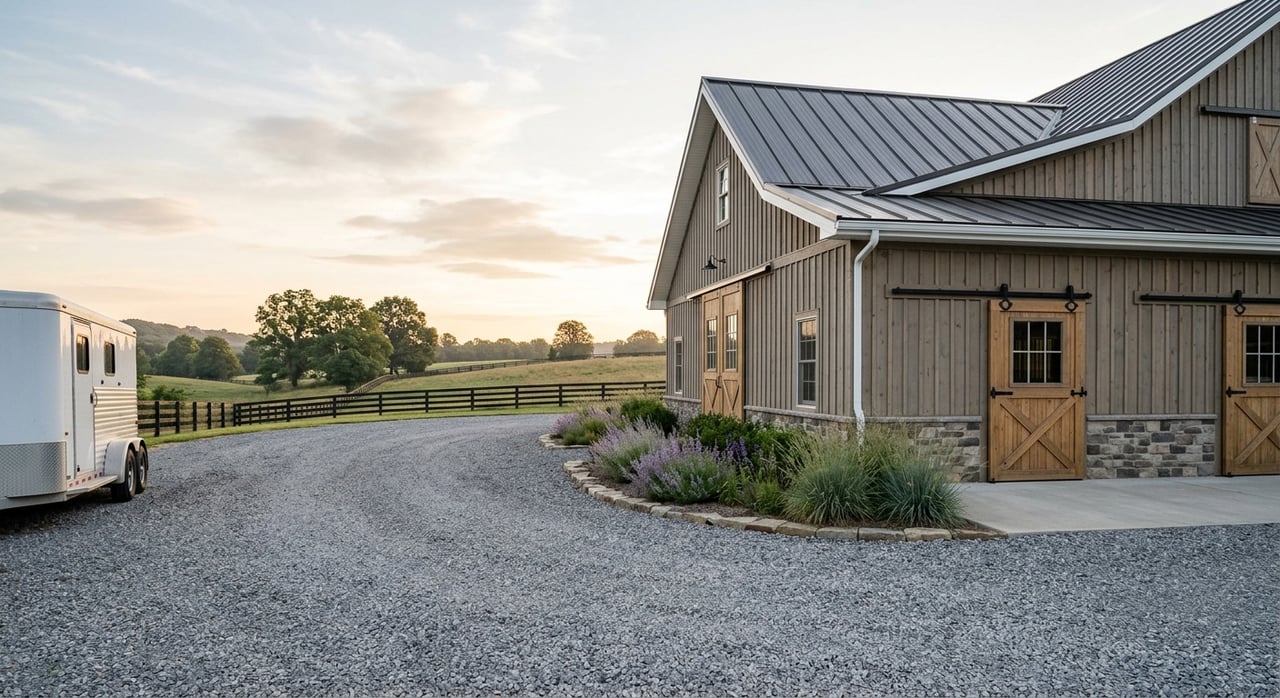
If you are dreaming about a horse property near Monticello, it is easy to focus on the barn, the view, and the acreage total. But with equestrian real estate, the real question is simpler: will the land actually work for the way you plan to keep and ride horses? If you are buying in Jasper County, a little upfront due diligence can save you time, money, and frustration later. This guide walks you through the practical issues to check before you buy, from pasture and water to fencing, access, and zoning. Let’s dive in.
Start With the Land
When you buy equestrian property near Monticello, the acreage number alone does not tell the full story. A tract may look ideal on paper, but pasture productivity, soil condition, drainage, and water access all affect whether it can support your goals.
According to UGA equine resources, Georgia has a mature equine sector, and many established trainers have moved to the state. That is helpful if you may need training or boarding support, but it also means you should verify access to those services property by property instead of assuming every rural parcel is equally convenient.
Match Acreage to Horse Use
A common mistake is assuming more land automatically means enough grazing. UGA notes that pasture acreage needs vary based on forage species, moisture, productivity, and supplemental feeding plans. As a rule of thumb, a horse should consume at least 1 percent of its body weight in hay or equivalent pasture daily, so your review should focus on how the land performs, not just how large it is.
If you want to keep multiple horses, ask whether the existing pasture setup can realistically support that number. A property with poor forage, limited rotation options, or wet ground may require more hay, more renovation, and more management than you expect.
Check Soils Early
Soil quality plays a major role in how useful an equestrian property will be. UGA notes that many Georgia soils have low pH and may be deficient in phosphorus, potassium, calcium, or magnesium, which can limit forage performance if left uncorrected.
A smart first step is reviewing the Web Soil Survey and UGA testing guidance. That can help you understand mapped soil conditions, but it should not replace onsite evaluation. If you are serious about a property, soil testing is a practical next move.
Review Pasture and Forage Conditions
Pasture matters because it affects both horse health and long-term property costs. In Georgia, UGA says warm-season grasses such as bermudagrass and bahiagrass provide summer grazing, while cool-season grasses can help extend the grazing season.
Bermudagrass generally performs best on fertile, well-drained soils. If the property already has tall fescue, ask questions about the stand. UGA notes that buyers should find out whether it is endophyte-free or novel-endophyte stock, because toxic endophytes can create reproductive issues in horses.
Test Forage Instead of Guessing
It is tempting to judge hay or pasture by appearance alone, but that can be misleading. UGA says forage quality cannot be reliably evaluated by smell or looks alone, which is why testing matters.
The Jasper County Extension office in Monticello can help with soil, feed, forage, well-water, and pond-water testing. That local support can be especially useful if you are buying a property that needs pasture improvement or if you want better information before closing.
Confirm Water Sources and Water Quality
Water is one of the most important and most overlooked parts of buying horse property. You need to know not only where the water comes from, but also whether it is dependable, safe, and practical for daily use.
UGA notes in its livestock drinking water quality guidance that water quality varies by source and delivery method. Ponds can develop algae and bacteria problems in hot months, and private well owners are responsible for water safety.
Questions to Ask About Water
Before you buy, consider asking:
- Is the property served by a private well, pond, or another source?
- Has the well water been tested recently?
- Are automatic waterers, hydrants, or spigots already in place?
- Does the pasture layout make it easy for horses to reach water?
- Are there seasonal issues with drainage, standing water, or pond quality?
If testing has not been done, the local extension office can help you decide what to evaluate. This is a small step that can prevent much larger problems later.
Look Closely at Fencing and Gates
A horse property may look tidy from the road, but fencing details matter. Safe horse fencing should be visible, durable, and sized correctly for the intended use.
UGA fence guidance recommends a 5-foot perimeter fence, 54-inch cross fencing, and a bottom edge 6 to 8 inches above the ground. The same guidance says diamond mesh or square-knot mesh with 2x4 or 2-to-4-inch openings is acceptable, while 2x4 welded wire is not recommended for horse fencing.
Gate Width Is a Big Deal
Gate size can affect everyday function more than many buyers expect. UGA recommends pasture gates that are 14 to 16 feet wide to allow tractors and mowers to enter, and at least 8 feet wide if horses and equipment use the same opening.
That guidance also points to a broader layout issue. As you tour a property, look for straight trailer access, enough room to turn farm vehicles, and a setup that avoids tight corners near the barn, paddocks, and hay storage. A beautiful barn is less useful if getting a trailer in and out feels difficult every time.
Verify Zoning Before You Assume Anything
One of the biggest mistakes buyers make is assuming a rural parcel is automatically ready for horses. Zoning and local development rules can affect how many horses you can keep and what improvements are allowed.
The Jasper County Unified Development Ordinance includes district-specific horse standards. In one rural-keeping district, farm animals require at least 3 acres, horses are listed at 0.5 acres per animal, and the maximum shown is 6 horses with a minimum fenced pasture of 1 acre. In an agricultural-keeping district, the minimum lot area is 2 acres with the same 0.5-acre-per-horse standard.
Why Parcel-Specific Review Matters
The key takeaway is simple: confirm the exact zoning district before you buy. Two properties with similar acreage can have very different compliance standards depending on the district. If you plan to add fencing, renovate a barn, or increase horse capacity, this step becomes even more important.
Consider Riding Access Near Monticello
If trail riding is part of your lifestyle, nearby public riding options can add real value to your purchase decision. Near Monticello, the Ocmulgee Bluff Horse Bike and Hike Trail System offers more than 30 miles of mixed-use trail, along with horse camping, hitching posts, water spigots, and picnic tables.
Georgia also lists equestrian trails at parks including A.H. Stephens, Hard Labor Creek, and Watson Mill Bridge through its state parks equestrian information. If regular trail access matters to you, it is worth checking drive times from any property you are considering.
Know the Trail Rules
Public equestrian sites may have rules that affect how often and how easily you can ride. Georgia State Parks notes that some locations may require a negative Coggins or EIA test, daylight-only riding, and use of marked trails only.
Those requirements are not deal-breakers, but they are part of the ownership experience. If public trail access is one reason you are buying near Monticello, it helps to understand the actual rules before you commit.
Use Local Experts for Due Diligence
Buying equestrian property is rarely just about the home itself. It is also about understanding how the land functions today and what it may need tomorrow.
The most practical local starting points are the Jasper County Extension office and the Georgia NRCS office network. Extension can help with testing and county-level guidance, while NRCS offers technical and financial assistance for conservation planning. Together, they can help you evaluate soils, drainage, pasture renovation, and land-management needs more clearly.
A Smart Buying Checklist
As you compare equestrian properties near Monticello, keep this checklist in mind:
- Verify zoning for the specific parcel
- Review pasture condition, forage type, and drainage
- Test soil rather than relying on assumptions
- Confirm water source, access, and water quality
- Evaluate fencing safety and visibility
- Measure gate widths and trailer turning space
- Check access to trainers, boarding, and equine services
- Review nearby riding options and trail-use rules
- Identify any pasture renovation or infrastructure upgrades needed
A horse property should support your day-to-day routine, not complicate it. The more carefully you evaluate land, layout, and local rules, the more confident you can feel about your purchase.
If you are exploring equestrian property near Monticello or anywhere in the Lake Country corridor, Hendrix Real Estate Group can help you assess land, lifestyle fit, and the practical details that matter before you buy.
FAQs
What should you look for when buying equestrian property near Monticello, Georgia?
- Focus on pasture quality, soil condition, water sources, fencing, gate width, trailer access, and parcel-specific zoning, not just total acreage.
How many horses can a property in Jasper County allow?
- That depends on the parcel’s exact zoning district, so you should confirm local standards before assuming a property is compliant for your intended horse use.
Why is soil testing important for horse property in Georgia?
- UGA notes that many Georgia soils have low pH and nutrient deficiencies, so testing helps you understand whether pasture can support your horses and what improvements may be needed.
Where can you ride horses near Monticello, Georgia?
- Nearby options include the Ocmulgee Bluff Horse Bike and Hike Trail System, and Georgia also lists equestrian trails at parks such as A.H. Stephens, Hard Labor Creek, and Watson Mill Bridge.
Who can help evaluate land for an equestrian purchase near Monticello?
- Jasper County Extension and Georgia NRCS are useful starting points for questions about soils, drainage, forage, water testing, and conservation planning.